
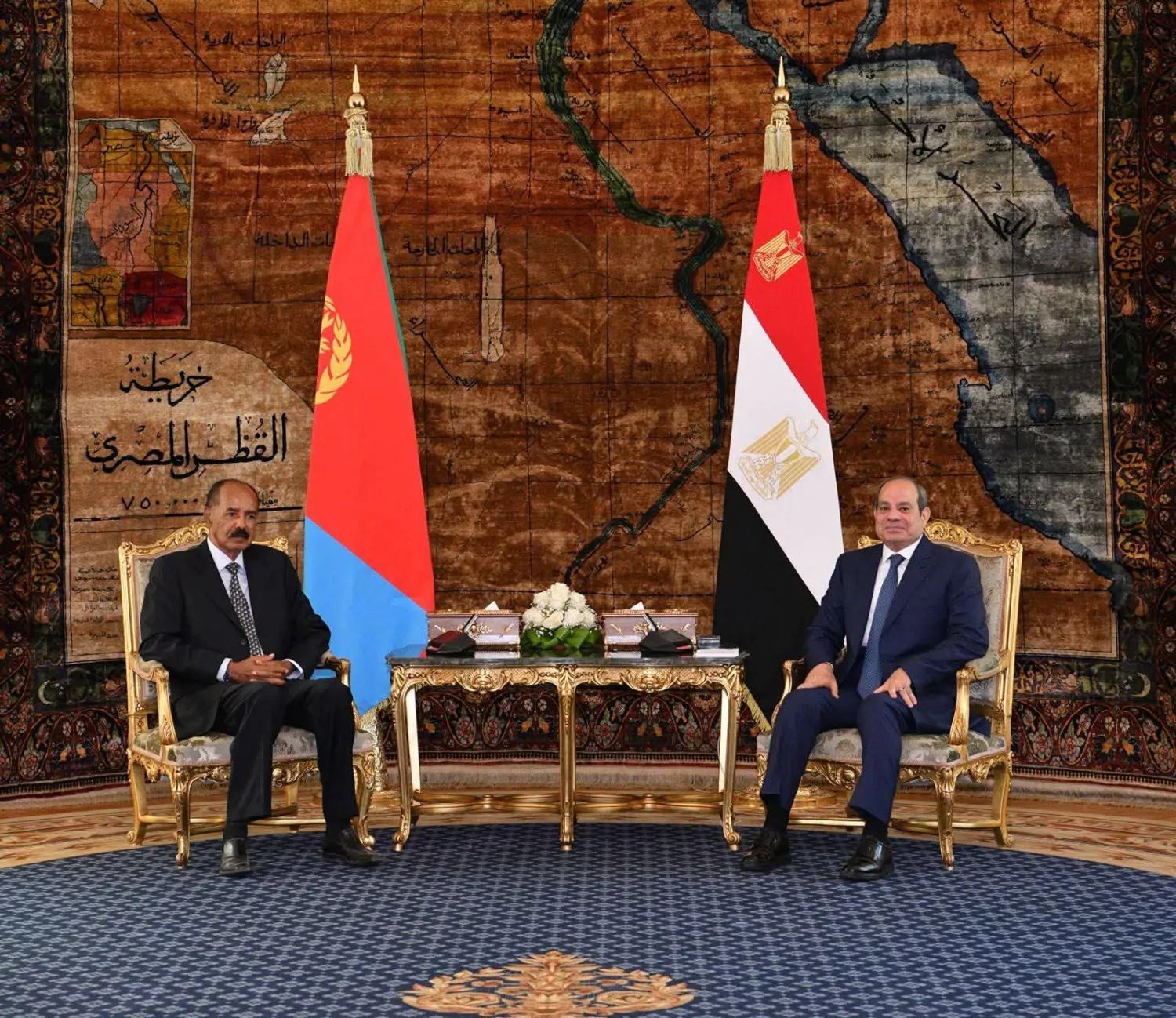
Red Sea security tops the agenda in talks between Sisi and Afwerki in Cairo
The talks come amid disputes with Ethiopia over its refusal to grant access to the Red Sea, and African affairs experts who spoke to Asharq Al-Awsat believe that they “carry utmost importance, given the importance of the consultations that took place regarding the security of the Red Sea.”
During a meeting with his Eritrean counterpart Isaias Afwerki, Egyptian President Abdel Fattah al-Sisi stressed the need to continue working to enhance relations between the two countries and advance them in various fields, emphasizing Egypt's "firm commitment to supporting Eritrea's sovereignty and territorial integrity," according to a statement from the Egyptian presidency.
The two sides discussed “the situation in the Horn of Africa region, and the existing cooperation between the two countries to ensure the security of the Red Sea and freedom of maritime navigation in it.”
Sisi also pointed to the importance of intensifying coordination between the two countries, stressing the “exclusive responsibility of the Red Sea littoral states in governing it and maintaining security and stability in it,” a point with which his Eritrean counterpart agreed.
In this regard, the two leaders agreed to "continue the existing coordination and consultation between the two countries in order to ensure regional peace and stability, and to support efforts to achieve comprehensive development in the region," according to a statement from the Presidency.
Red Sea security
African affairs expert Asmaa Al-Husseini believes that this visit is of great importance given Eritrea’s geopolitical position and its vital role in the Red Sea, in addition to the fact that it comes at a critical time when the Horn of Africa region is witnessing escalating tensions between Ethiopia and Eritrea, as well as in Somalia, which she said is “threatened in its unity, sovereignty and territorial integrity due to the interventions of Israel, and before it Ethiopia, in search of a foothold in the strategic port of Berbera in the breakaway region of Somaliland.”
She stressed that coordination between Cairo and Asmara is of utmost importance at this stage, with the aim of preserving the security and stability of the Red Sea, protecting the security of the Horn of Africa, and defending the common interests and issues of the two countries.
According to Abdullah Ahmed Ibrahim, director of the Center for East African Studies in Nairobi and an expert on African affairs, “the security of the Red Sea naturally takes priority in the discussions due to its utmost importance to both countries in light of the current threats and the Israeli infiltration into the breakaway region.”
African affairs expert Mohamed Torshin believes that the Eritrean president’s visit to Cairo complements the frequent visits between the two countries in light of the tense situation in the Horn of Africa and the Red Sea, especially after the continuous threats issued by Ethiopia that it will not accept the conditions that made it a landlocked country after Eritrea’s separation from it in the early nineties, which raises fears of a war breaking out with it in order to obtain a sea outlet.
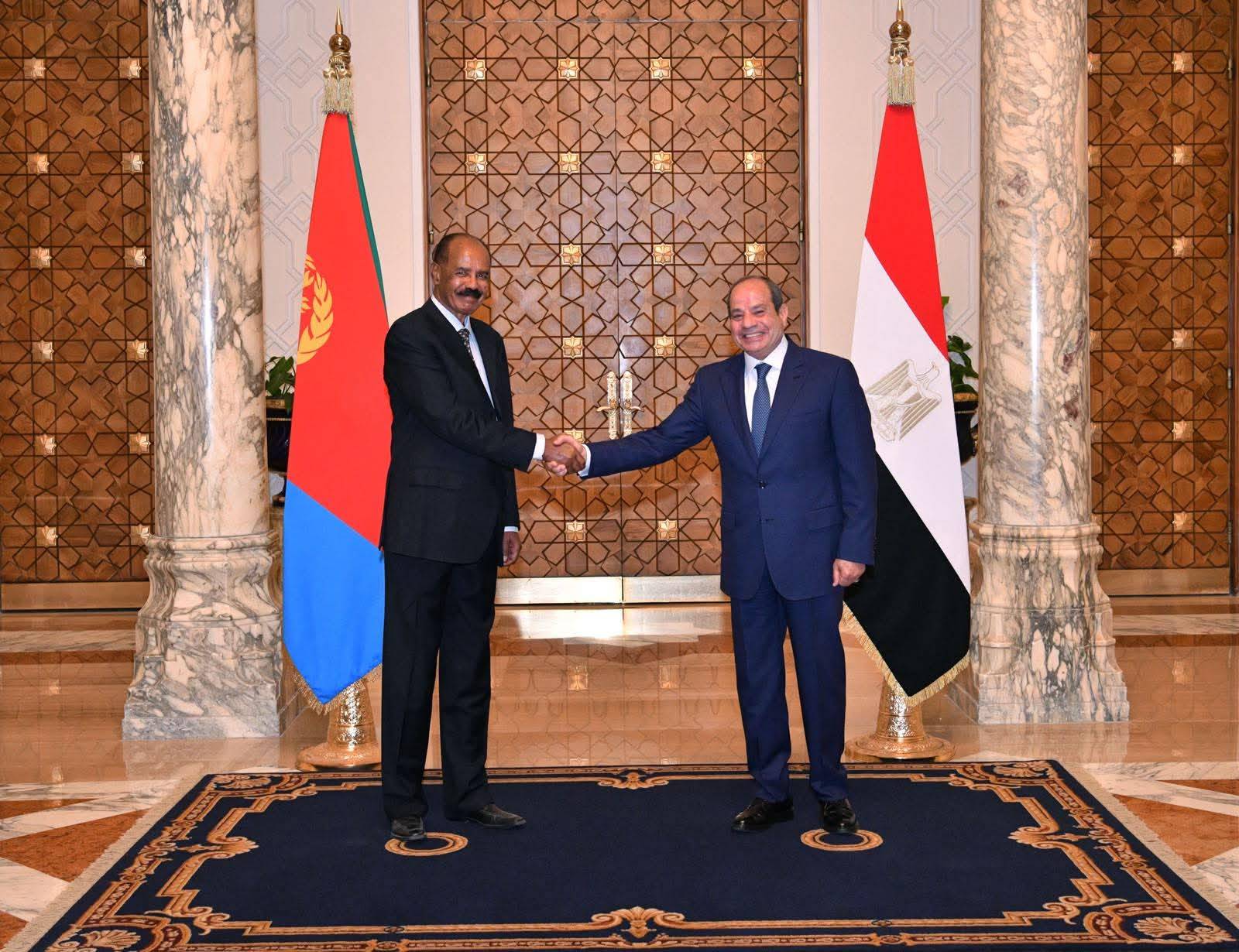 The Egyptian and Eritrean presidents discussed the situation in the Horn of Africa region on Monday (Egyptian Presidency).
Increasing coordination
It is noted that coordination between Cairo and Asmara has been increasing in recent years in light of the two countries’ shared opposition to Ethiopia, which rejects Egypt’s request to conclude a binding agreement on the filling and operation of the Ethiopian Renaissance Dam, in addition to the existing tension between Eritrea and Ethiopia and the threat of military escalation.
Sisi visited the Eritrean capital Asmara in October 2024, amid the activation of the tripartite coordination mechanism between Egypt, Eritrea and Somalia.
Last March, Egyptian Foreign Minister Badr Abdel-Aty delivered a verbal message from President Sisi to his Eritrean counterpart regarding "strengthening and developing relations in various fields." Last May, Abdel-Aty and Transport Minister Kamel El-Wazir met with Afwerki in Asmara to discuss enhancing cooperation and developments in the Red Sea. Abdel-Aty emphasized at the time that no non-littoral parties should be involved in any arrangements or understandings concerning the Red Sea.
About a week after the visit, and following official assurances rejecting the presence of non-coastal states on the Red Sea, the Ethiopian Foreign Ministry accused Egypt of trying to obstruct its access to a sea outlet.
Asmaa Al-Husseini believes that the Ethiopian side “always views this rapprochement with suspicion, doubt, and caution, and constantly blames Egypt and its allies, portraying them as a threat to its interests, even though Addis Ababa is the real threat to the interests of its people and the peoples of the region because of its continuous ambitions in the role of the neighbor,” she said.
Torshin believes that Ethiopia “will continue to view Egypt as a challenge and an obstacle preventing it from achieving its illegal goals in the Horn of Africa and the Red Sea,” expecting that “the Cairo-Asmara alliance will continue to reject Ethiopian expansion towards the sea, especially since it is not based on any legal justification, and will open the door to real challenges and greater crises in the Horn of Africa and the Red Sea region,” according to his statement.