
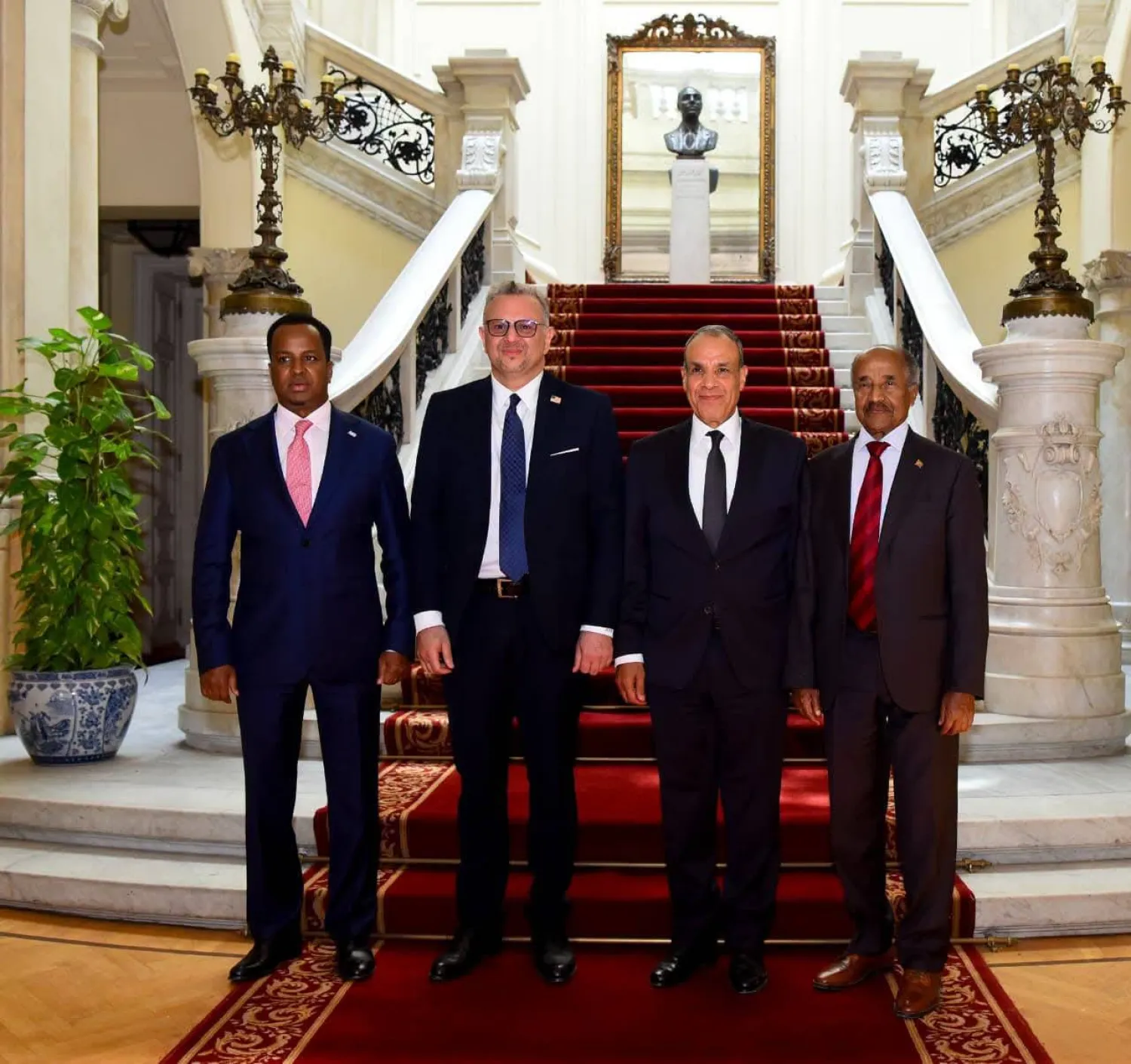
A series of joint and separate consultations hosted by Egypt brought together the foreign ministers of Egypt, Eritrea and Somalia, and Massad Boulos, senior advisor to US President Donald Trump on Arab and African affairs, to discuss issues in the African continent and the Middle East.
The Egyptian Foreign Ministry said in a statement on Sunday that the meetings held between Foreign Minister Badr Abdel-Aty and his counterparts in Eritrea, Osman Saleh, Somalia, Abdisalam Abdi, and Massad Boulos, senior advisor to the US president, came “within the framework of efforts aimed at establishing peace, security and stability in the Horn of Africa region.”
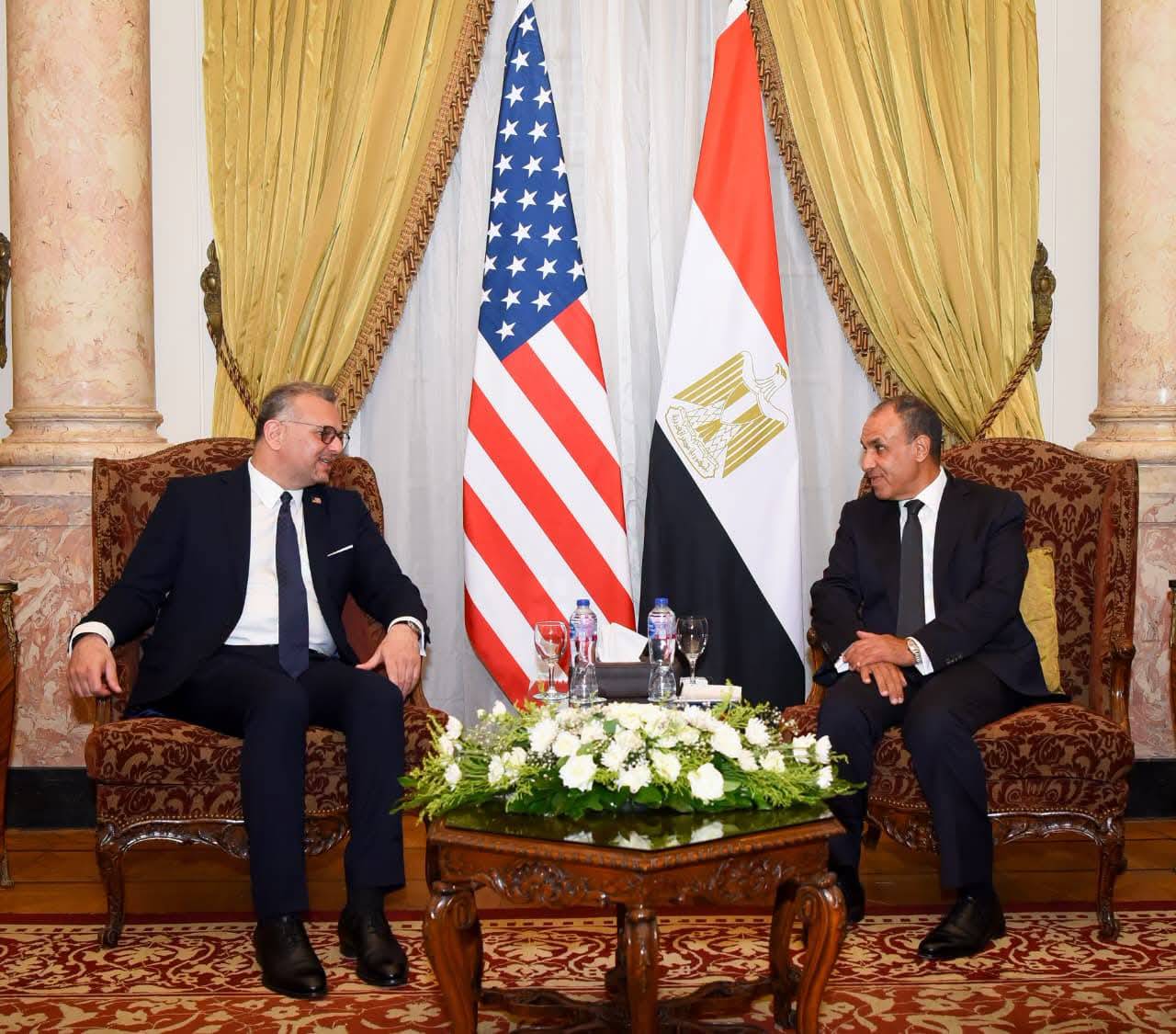 Egyptian Foreign Minister's talks with Boulos Massad in Cairo on Sunday (Egyptian Foreign Ministry Facebook page)
According to separate statements from the Egyptian Foreign Ministry, Abdel-Aati met separately with Boulos, Osman Saleh, and Abdel-Salam Abdi.
Abdel-Aati and Boulos discussed the situation in Sudan, and the Egyptian official stressed “the importance of reaching a sustainable ceasefire, intensifying the humanitarian response, and supporting a comprehensive political process led and owned entirely by Sudan, in a way that preserves the unity of Sudan and meets the aspirations of its people for security, stability and development.”
The two sides exchanged views on international efforts to advance the political process in Libya. Abdel-Aty affirmed Egypt's support for all UN, regional, and international efforts, including US efforts, aimed at achieving a sustainable political settlement that preserves the unity of the Libyan state and fulfills the aspirations of its people.
During the meeting between Abdel-Aati and the Eritrean Foreign Minister, the two ministers affirmed that “the security and management of the Red Sea remains the exclusive responsibility of the littoral states, and the complete rejection of any attempts by other parties to impose security arrangements or roles in this context, or to impose their maritime access in violation of the provisions of international law,” in a new reference to the two countries’ rejection of demands from non-littoral Ethiopia to access a sea outlet in the Red Sea in recent years.
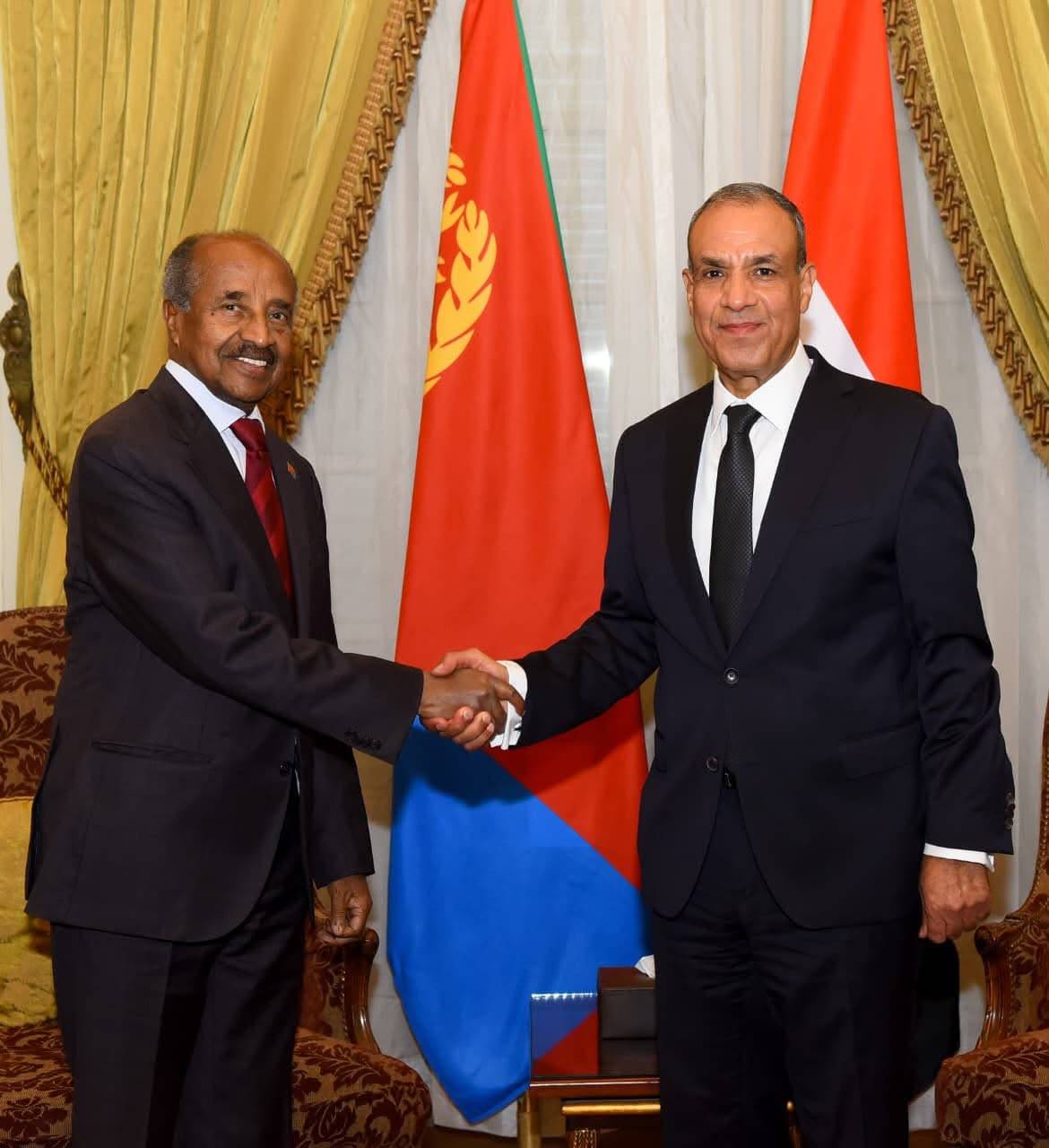 A joint meeting between the foreign ministers of Egypt, Somalia and Eritrea with Trump's top advisor on Sunday in Cairo (Egyptian Foreign Ministry Facebook page)
During his meeting with Abdisalam Abdi, Abdel-Aati affirmed “Egypt’s full support for the unity, sovereignty, and territorial integrity of Somalia,” reiterating “his country’s commitment to continuing to support efforts to build Somali state institutions and enhance their capabilities in establishing security and stability, especially in the face of the challenges of terrorism and extremism.”
Those consultations are seen by Mohamed Hegazy, a member of the Egyptian Council for Foreign Affairs and former Assistant Foreign Minister, as “an attempt to find solutions to complex crises, as well as revealing an American rapprochement with Cairo as a real center of gravity capable of helping to reach those solutions.”
Hegazi believes that “these meetings are part of a series of intensive diplomatic consultations hosted by Egypt, to discuss how to quickly reach solutions that support stability in Africa and the Middle East.”
He adds to Asharq Al-Awsat that “these consultations reflect a desire to transform bilateral consultations into a broader regional and international dialogue, aimed at coordinating positions and exploring practical mechanisms to deal with common challenges in Sudan, the Horn of Africa, the Red Sea, Libya, and various other areas of tension.”
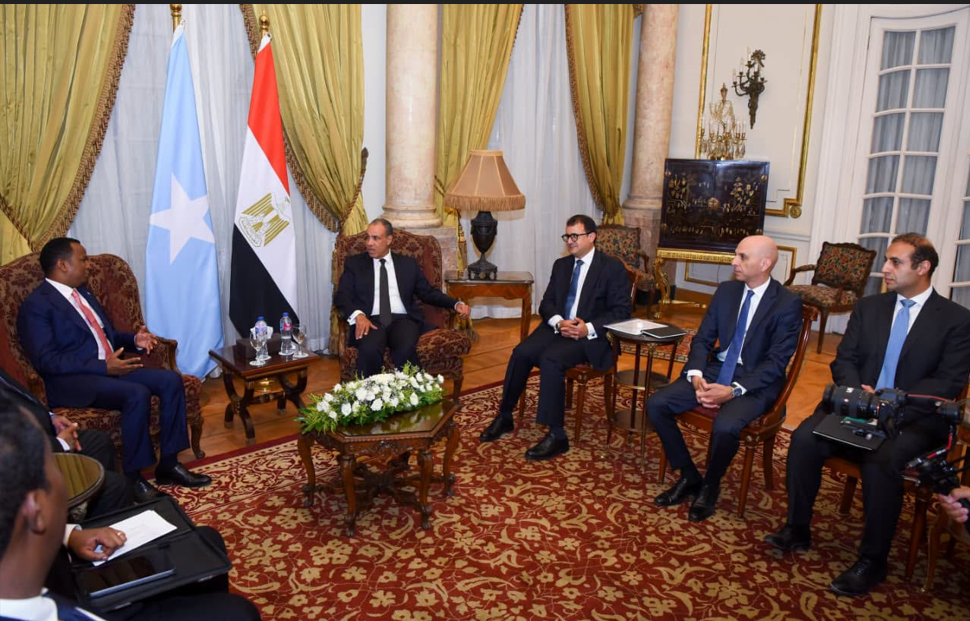 Egyptian Foreign Minister during a meeting with the Somali Foreign Minister on Sunday (Egyptian Foreign Ministry Facebook page)
According to Mohamed Hijazi, these consultations are gaining importance in light of the possibility of advancing political settlement paths, whether through consolidating the ceasefire in Sudan, supporting the rebuilding of state institutions, or pushing towards unifying Libyan institutions and creating conditions for holding elections that establish lasting stability.
He explains: “These consultations are likely to provide an opportunity to discuss the future of stability in the Horn of Africa, reduce regional tensions, and explore opportunities for rapprochement between the United States and Eritrea, given the close relations that link Cairo to Asmara on the one hand, and its strategic partnership with Washington on the other.”
He points out that the United States now views the files of Sudan, Libya, the Horn of Africa and the Red Sea as “interconnected files within a single regional security equation, and that Egypt remains the most capable regional partner to contribute to managing these challenges.”